

Table of Contents
- What Sensitive and Reactive Skin Actually Means
- Common Skincare Irritants to Avoid
- Soothing Ingredients for Reactive Skin
- How to Repair Skin Barrier Naturally
- Building a Natural Skincare Routine for Sensitive Reactive Skin
- Sustainability vs. Efficacy: Do You Have to Choose?
- Frequently Asked Questions
Sensitive reactive skin is one of the most misunderstood conditions in skincare, and the wrong product choice can trigger a cycle of redness, tightness, and frustration. At The Ilex Wood, we formulate hand-crafted, plant-based products specifically for people whose skin doesn't tolerate the usual approach. This guide covers what's actually triggering your flare-ups, which ingredients calm things down, how to rebuild your skin barrier, and how to build a gentle routine that holds up through seasonal changes.
What Sensitive and Reactive Skin Actually Means
Sensitive skin is a baseline characteristic: skin that is structurally more permeable, with a thinner or more compromised lipid barrier. Reactive skin is the response pattern that follows: redness, stinging, flushing, or breakouts triggered by products, temperature changes, or environmental stressors.
Is Reactive Skin the Same as Sensitive Skin?
Reactive skin is not the same as sensitive skin, though the two frequently overlap. Sensitive skin describes a skin type, while reactive skin describes a behaviour. Someone with oily skin can have highly reactive skin; someone with dry, fragile skin may react minimally to the same triggers. According to British Association of Dermatologists guidance on skin sensitivity, conditions including rosacea-prone skin and atopic dermatitis sit at the more clinical end of the reactive spectrum, but many people experience reactivity without a formal diagnosis.
The Psychological Weight of Living with Reactive Skin
Living with unpredictable skin affects confidence in ways that go beyond vanity. The anxiety of trying a new product, the embarrassment of visible redness in a meeting, and the exhaustion of reading every ingredient label are real and cumulative stressors. Many people with sensitive reactive skin over-restrict their routine, stripping back so aggressively that they remove beneficial ingredients alongside problematic ones, which paradoxically worsens barrier function. The goal isn't a zero-product routine, it's a calm, intentional one.
Common Skincare Irritants to Avoid
The most common mistake with reactive skin is treating it as a mystery when the triggers are, in many cases, well-documented. The following ingredients appear repeatedly in adverse reaction reports:
- Synthetic fragrances (listed as "parfum" or "fragrance"): the single most common contact allergen in cosmetics
- Alcohol denat (denatured alcohol): strips the lipid barrier and increases transepidermal water loss
- Sodium lauryl sulphate (SLS): disrupts the skin microbiome and damages the barrier with repeated use
- Parabens: preservatives that some individuals find problematic, particularly methylparaben and propylparaben
- Essential oils in high concentrations: despite their natural origin, oils such as peppermint, eucalyptus, and citrus can be potent irritants
- Chemical UV filters (such as oxybenzone and octinoxate): a common trigger for rosacea-prone skin
- Artificial colourants: no functional benefit, real irritation risk
The "natural" label is not a guarantee of tolerability. A product can be 100% plant-based and still contain high concentrations of botanicals that provoke a reaction.
Dietary and Lifestyle Triggers Worth Knowing
Skincare products are only part of the picture. Common dietary and lifestyle triggers include alcohol consumption, spicy foods, high-glycaemic foods, chronic sleep deprivation, hot showers, and stress. As noted in NHS guidance on eczema triggers and lifestyle management, stress and environmental factors are recognised contributors to flare-ups in conditions affecting the skin barrier.
Soothing Ingredients for Reactive Skin
The right ingredients for sensitive reactive skin share a common profile: anti-inflammatory, humectant or emollient, pH-balanced, and free from unnecessary additives.
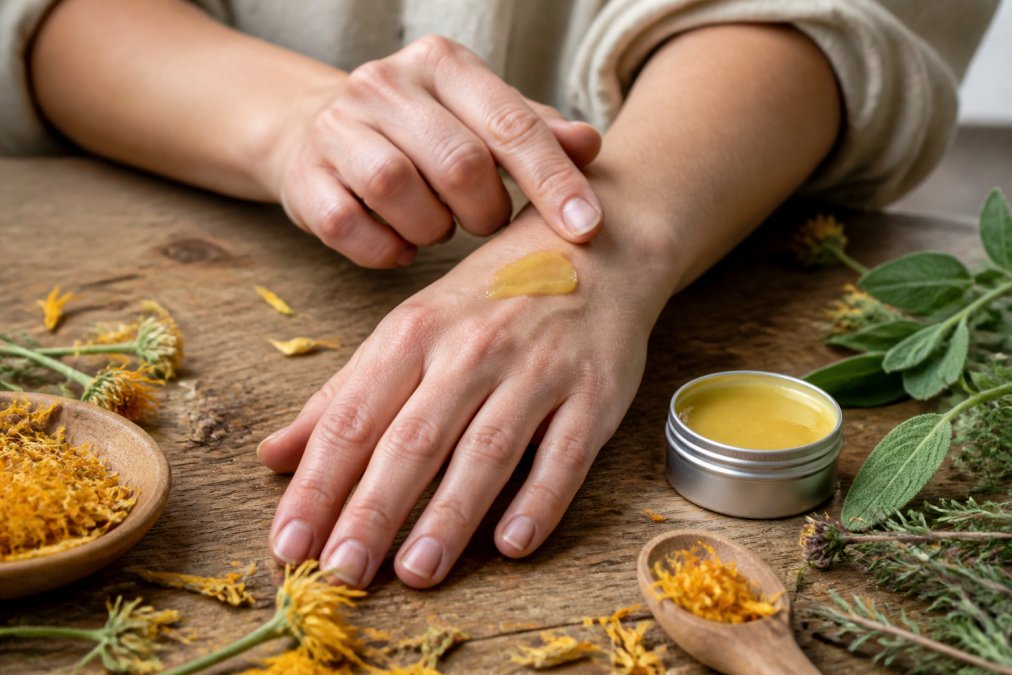
Key ingredients to look for:
- Colloidal oatmeal: one of the most evidence-supported soothing agents. It forms a protective film, reduces transepidermal water loss, and has documented anti-inflammatory properties.
- Calendula extract: contains flavonoids and triterpenoids that support skin barrier repair and reduce inflammatory responses.
- Aloe vera: a humectant and anti-inflammatory that draws moisture into the skin without occluding pores.
- Shea butter: rich in essential fatty acids and antioxidants, it supports the lipid barrier without synthetic additives.
- Chamomile: contains bisabolol and chamazulene, both with demonstrated anti-inflammatory effects.
- Comfrey: contains allantoin, which promotes cell renewal and supports skin repair.
- Plantain leaf: a lesser-known but highly effective calming botanical with anti-inflammatory and antimicrobial properties.
The Ilex Wood's Vegan Calendula Salve combines calendula extract in a plant-based, fragrance-free base specifically designed for dry, itchy, and irritated skin. At £16.95 for 100ml, it's formulated without synthetic additives, palm oil, or parabens.

Calming Botanicals That Reduce Redness
Redness reduction is one of the most sought-after outcomes for reactive skin. Botanical extracts with anti-inflammatory compounds reduce the inflammatory cascade that produces visible redness, rather than simply masking it. The most effective calming botanicals for redness-prone and rosacea-prone skin are calendula, chamomile, green tea extract, centella asiatica, and licorice root. Centella asiatica, in particular, has attracted significant attention for its role in skin barrier repair and its ability to reduce visible redness over time.
How to Repair Skin Barrier Naturally
The skin barrier is the outermost layer of the epidermis, a lipid-rich structure that prevents water loss and keeps environmental irritants out. When compromised, the result is increased transepidermal water loss, heightened sensitivity, and a skin surface that reacts to things it previously tolerated.
Repairing the skin barrier naturally comes down to three principles: replenishing lipids, reducing inflammation, and stopping further damage.
Replenish lipids by using emollients rich in essential fatty acids. Ingredients like shea butter, sea buckthorn oil, and rosehip seed oil mimic the natural lipid profile of a healthy barrier.
Reduce inflammation with calming botanicals. Colloidal oatmeal, calendula, and chamomile are particularly well-suited to the barrier repair phase because they soothe while the skin rebuilds.
Stop further damage by simplifying your routine. Every additional product is a potential stressor during active barrier compromise. Strip back to a gentle cleanser, a barrier-supportive moisturiser or salve, and SPF. Add actives back gradually once the barrier has stabilised.
According to British Skin Foundation information on the skin barrier, maintaining a healthy skin barrier is foundational to managing most inflammatory skin conditions.
The Herbal Healing Salve 'Boo Boo Balm' from The Ilex Wood contains herbal infusions of comfrey, plantain, calendula, and yarrow: four botanicals with complementary barrier-repair and anti-inflammatory properties.

Building a Natural Skincare Routine for Sensitive Reactive Skin
A minimal, consistent routine outperforms a complex one for sensitive reactive skin. The goal is to provide what the skin needs without introducing unnecessary variables.
Morning:
- Rinse with cool or lukewarm water
- Apply a lightweight, fragrance-free moisturiser or barrier balm while skin is still slightly damp
- Finish with a mineral SPF (zinc oxide is the most tolerated option for reactive skin)
Evening:
- Cleanse gently with a pH-balanced, synthetic-free cleanser
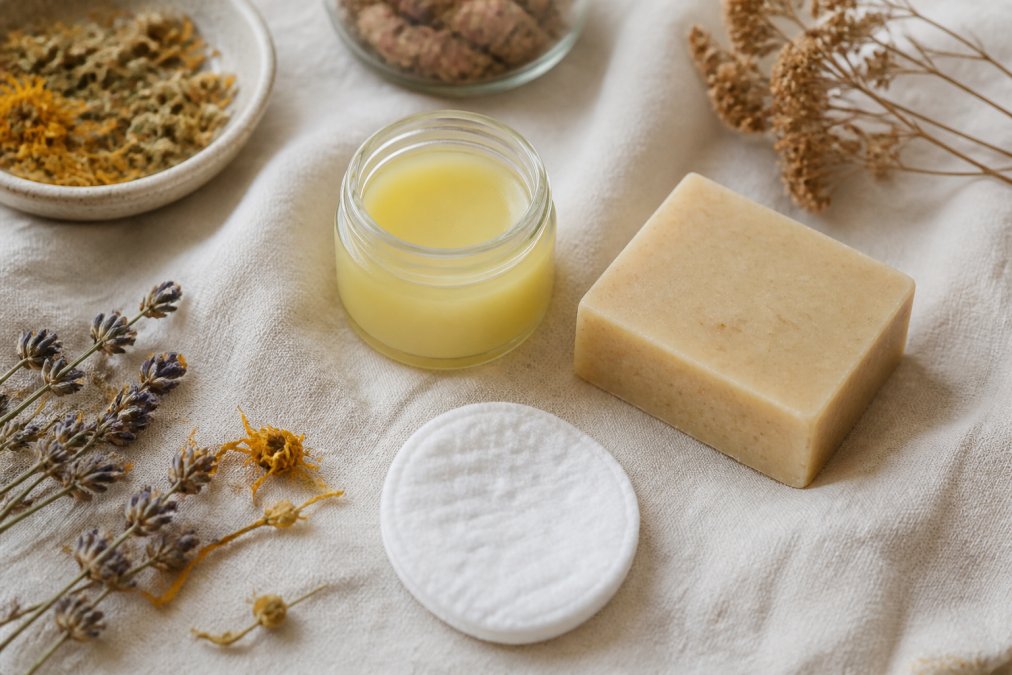
- Apply a nourishing, plant-based balm or oil to support overnight barrier repair
- If experiencing active irritation, apply a targeted soothing agent such as a calendula or colloidal oatmeal formulation
| Step | Product Type | Key Property | Frequency |
|---|---|---|---|
| Cleanse | pH-balanced, SLS-free wash | Gentle, non-stripping | Morning and evening |
| Moisturise | Lipid-rich balm or cream | Barrier-supportive | Morning and evening |
| Protect | Mineral SPF (zinc oxide) | Non-reactive UV filter | Morning only |
| Targeted treatment | Calendula or oat-based salve | Anti-inflammatory | Evening or as needed |
How to Patch Test New Products Safely
Patch testing is non-negotiable for sensitive reactive skin. A reliable patch test works as follows:
- Apply a small amount of the new product to the inside of your wrist or the crook of your elbow
- Leave it on for 24 hours without washing the area
- Check for redness, itching, swelling, or any change at 24 hours
- If no reaction, repeat for a second 24-hour period before applying to your face
- Introduce only one new product at a time, with at least a week between introductions
The most common mistake is applying a new product to the face after a single clean patch test result. Facial skin is significantly more reactive than the inner arm for many people.
Seasonal Transition Protocols
Seasonal changes are a consistently underestimated trigger for reactive skin. The shift from summer to autumn brings lower humidity, central heating, and wind exposure: a combination that dramatically increases transepidermal water loss. Spring transitions bring pollen, increased UV exposure, and temperature fluctuations.
A practical seasonal transition protocol:
- Autumn/Winter: Increase the richness of your moisturiser two to three weeks before the season change. Swap lighter oils for more occlusive balms. Add a humidifier to your sleeping environment.
- Spring/Summer: Introduce mineral SPF earlier than you think you need to. Reduce heavy occlusives that may clog pores in warmer weather. Watch for pollen-triggered flushing and have a soothing, anti-inflammatory product available.
The key is anticipation. Reactive skin responds poorly to abrupt changes.
Sustainability vs. Efficacy: Do You Have to Choose?
The most persistent myth in natural skincare is that choosing sustainable, plant-based products means accepting a trade-off in results. For sensitive reactive skin, the equation often runs the opposite way. Many of the most evidence-supported ingredients for barrier repair and redness reduction, including colloidal oatmeal, calendula, and centella asiatica, are plant-based by nature.
The real sustainability challenge is greenwashing. A product can carry organic certification and still be packaged in single-use plastic, shipped with significant carbon impact, or formulated with palm oil derivatives under obscure ingredient names. Genuine sustainability requires transparency across the entire supply chain.
The Ilex Wood addresses this directly: products are 100% natural, vegan, and cruelty-free, with plastic-free packaging, carbon-free shipping, and a palm oil-free formulation policy. For sensitive reactive skin specifically, the absence of synthetic fragrances, parabens, and alcohol denat in a genuinely natural formulation removes the most common irritant classes in one step.
As noted in Soil Association's standards for organic and natural cosmetics, organic certification in cosmetics covers ingredient sourcing and processing standards, providing a verifiable benchmark for consumers navigating the natural beauty market.
Sensitive reactive skin doesn't have to mean a permanently restricted, reactive routine. The challenge is finding products that genuinely deliver barrier support and redness reduction without the synthetic additives that trigger the cycle in the first place. The Ilex Wood's hand-crafted, plant-based formulations, including the Vegan Calendula Salve and Herbal Healing Salve, are built specifically for this: fragrance-free, palm oil-free, and made with calming botanicals that support the skin barrier rather than stress it. Browse our products and find the right starting point for your routine.
Frequently Asked Questions
Q: Is reactive skin the same as sensitive skin?
A: They overlap but are not identical. Sensitive skin is a baseline trait where the skin is generally more prone to irritation, redness, and discomfort. Reactive skin describes a pattern of visible responses, such as flushing, stinging, or breakouts, triggered by specific products, environmental changes, or stress. Many people with sensitive skin also experience reactivity, but you can have reactive episodes even if your skin is not classed as sensitive overall. A fragrance-free, pH-balanced natural skincare routine helps both conditions.
Q: How can I calm down reactive skin quickly?
A: Strip your routine back to the bare minimum: a gentle, fragrance-free cleanser and a simple, alcohol-free moisturiser or balm. Avoid introducing new products until the reaction settles. Ingredients such as colloidal oatmeal, calendula extract, and allantoin are well-regarded for redness reduction and soothing irritated skin. Cool water rather than hot when cleansing also helps. If the reaction persists or covers a large area, consult a dermatologist or your GP.
Q: What natural skincare ingredients should people with sensitive reactive skin look for?
A: Look for plant-based, anti-inflammatory botanicals: calendula, chamomile, and plantain are calming and well-tolerated by most skin types. Colloidal oatmeal supports skin barrier repair and reduces transepidermal water loss. Humectants such as glycerin draw moisture in without clogging pores. Essential fatty acids from oils like rosehip or hemp seed help restore the lipid barrier. Products labelled fragrance-free, alcohol-free, and dermatologically tested reduce the risk of a reaction on sensitive reactive skin.
Q: Why does my skin react to so many different products?
A: Frequent reactions often point to a compromised skin barrier. When the lipid barrier is damaged, irritants, allergens, and environmental pollutants penetrate more easily, triggering inflammation. Overuse of harsh cleansers, synthetic fragrances, alcohol-based toners, and exfoliants accelerates barrier damage. Stress, seasonal changes, and certain foods can also increase reactivity. Rebuilding the barrier with nourishing, plant-based ingredients and removing known irritants from your routine is the most effective long-term approach.
This article was written using GrandRanker