

Last Updated: 13 November 2026
Quick Summary
Cold pressed skincare keeps more of the vitamins, antioxidants and essential fatty acids that high heat and chemical solvents can degrade, so the oil stays closer to the original plant. This supports the skin barrier, helps counter everyday environmental stress and leaves skin softer and calmer. Cold-pressed oils also carry no solvent residues, though they cost more and spoil faster.
- Cold pressing crushes and presses nuts, seeds and fruit mechanically, with no heat or solvents added.
- Refined oils are treated with high heat and solvents such as hexane, which strips out certain vitamins and antioxidants.
- The term cold-pressed is not legally defined in the UK, so check the label for a clear extraction statement.
- Patch test on the inner forearm for 24 to 48 hours before using a new oil on your face.
- Apply two to three drops to slightly damp skin after cleansing and press rather than rub.
Table of Contents
- What Cold Pressing Does to Skincare Ingredients
- Cold-Pressed Versus Refined Oils: What Changes
- The 7 Advantages for Your Skin
- Choosing a Cold-Pressed Oil for Face by Skin Type
- The Best Oils for Dry Skin and How to Use Them
- How to Identify High-Quality Natural Skincare Ingredients
- Frequently Asked Questions
What Cold Pressing Does to Skincare Ingredients
Cold pressed skincare is the practice of extracting oils from nuts, seeds and fruit at low temperatures so the botanical keeps more of what made it valuable in the first place. Once you understand what the process protects, the appeal becomes practical rather than promotional.
Cold pressing is a mechanical extraction method: the raw material is crushed and pressed without the high heat or chemical solvents used in industrial refining. The result is an oil that still looks, smells and behaves like the plant it came from.
How the Extraction Process Works
In general, the nuts or seeds are crushed and pressed in a mechanical press, with no solvent added. This is why cold-pressed oils tend to carry a stronger scent, a deeper colour and a shorter shelf life than their refined cousins. Simple process, demanding raw material: the quality of the seed matters far more when you cannot hide behind heat and chemicals.
Cold-Pressed Versus Refined Oils: What Changes
The difference comes down to heat, solvents and what survives the process. Refined oils are typically treated with high heat and chemical solvents such as hexane to neutralise smell, colour and batch variation. This makes them consistent, long-lasting and cheap to produce, but it also strips out much of the natural character along with certain vitamins and antioxidants.
Cold-pressed oils skip that treatment. Nutrient retention is higher, the fatty-acid profile stays closer to the original plant, and the oil keeps its natural scent and colour. The trade-off is real: cold-pressed oils oxidise faster, vary from batch to batch, and often cost more because yields are lower and the raw material must be of higher quality.
| Feature | Cold-Pressed Oil | Refined Oil |
|---|---|---|
| Heat exposure | Minimal | High |
| Chemical solvents | None | Often used (e.g. hexane) |
| Nutrient retention | Higher | Reduced |
| Scent and colour | Natural, variable | Neutral, uniform |
| Shelf life | Shorter | Longer |
| Cost | Generally higher | Generally lower |
It is also worth knowing that cold pressing is not the only low-temperature method, and the term 'cold-pressed' is not legally defined in the UK, so quality varies. Look for a clear extraction statement on the label rather than assuming the phrase guarantees a superior product.
The 7 Advantages for Your Skin
Here is what cold-pressed skincare actually delivers, in order of how much difference it makes day to day:
- Nutrient retention of vitamins and antioxidants that heat can degrade
- Essential fatty acids that support the skin barrier
- Antioxidant protection against everyday environmental stress
- Moisture and hydration that leave skin softer, not tight
- Soothing properties that suit reactive, sensitive skin
- Purity, with no chemical residues from solvent extraction
- Natural character, meaning the scent and feel come from the plant itself
Nutrient Retention, Fatty Acids and Skin Barrier Support
The skin barrier is the outer layer that holds moisture in and irritants out, and it is built largely from lipids. Our plant-based facial oils explain this in more depth, and if your barrier already feels compromised, these steps to repair a damaged skin barrier naturally are worth reading alongside.
Antioxidant Protection, Softness and Soothing
Antioxidants in cold-pressed oils help counter the free radicals that drive visible ageing, while the oils themselves soften rough texture and calm the feel of irritated skin. You will not see overnight miracles, and anyone promising them is overselling. What you get is steady, cumulative improvement in softness and radiance.
Choosing a Cold-Pressed Oil for Face by Skin Type
Match the oil to your skin, not to the loudest label. Richer oils such as olive and argan are often chosen for dry skin, while jojoba is a lighter option for oilier skin. Sensitive skin may prefer plain, fragrance-free formulas, and a patch test is a sensible first step.
But skin type is only half the story. Cold-pressed oils are concentrated plant extracts, and any botanical can cause a reaction. Nut and seed allergies are the most common concern: if you react to almonds, avoid sweet almond oil; if you react to sesame, avoid sesame oil. Comedogenicity is another factor. Patch testing is not optional. Apply a small amount to the inner forearm, leave it for 24 to 48 hours, and check for redness, itching or swelling. If you have known allergies, eczema or rosacea, speak to a pharmacist or dermatologist before introducing a new oil. Stop using any product that causes irritation, and remember that 'natural' does not mean 'hypoallergenic'.
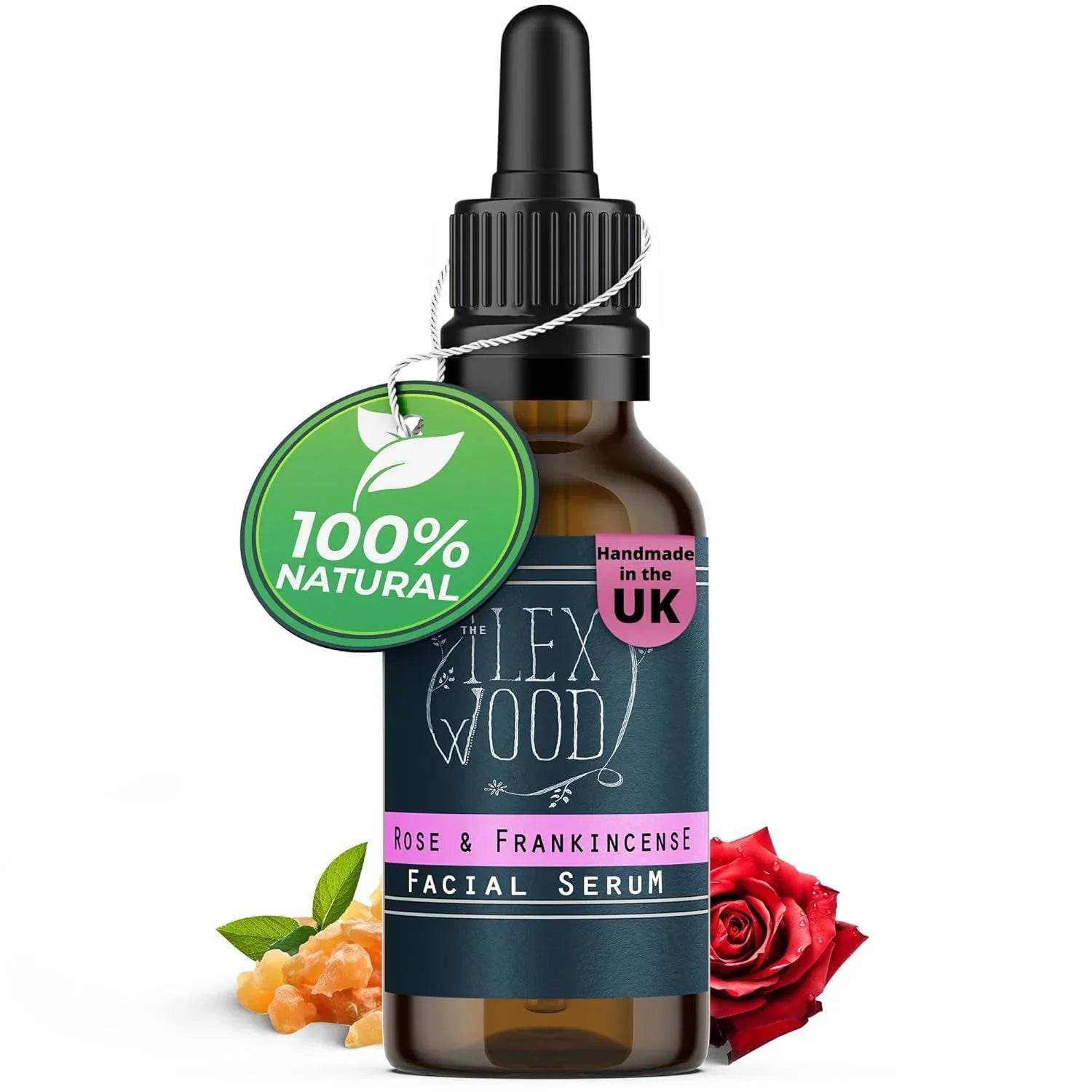
If you want to act on this, our Rose and Frankincense Facial Serum is a blend of sweet almond, jojoba and coconut oils with frankincense and rose, designed to support a more youthful complexion. Always patch test first, especially if you have sensitive skin or known allergies.
The Best Oils for Dry Skin and How to Use Them
Richer oils are often chosen for dry skin. Apply two to three drops to slightly damp skin after cleansing, morning or night, and press rather than rub. Layer a cream over the top if your skin still feels tight. Our seven simple steps for dry skin pair well with this routine.
Watch out: more oil is not better. Over-applying can leave a greasy film and clog pores, so start with two drops and build up only if your skin asks for more.
How to Identify High-Quality Natural Skincare Ingredients
Quality shows in the details. Look for a short ingredient list you can actually read, oils named by plant rather than by category, and packaging that protects the oil from light and air. Dark glass, a dropper and a clear batch date are good signs. Be wary of vague "natural" claims with no ingredient list behind them.
For a fuller method, our guide on how to identify high-quality natural skincare ingredients walks through the markers we use ourselves. The short version: transparency beats adjectives every time.
Cold-pressed skincare rewards patience, and the difference is clearest in products made with care rather than shortcuts. At The Ilex Wood, every serum and balm is 100% natural, vegan and cruelty-free, handcrafted in small batches with plastic-free packaging and carbon-free shipping. Start with our Rose and Frankincense Facial Serum at £19.95, or explore the full range to find the oil that suits your skin. Get started with The Ilex Wood and give your skin ingredients it recognises.
Frequently Asked Questions
What does cold pressed mean in skincare?
Cold pressing means the oil is extracted from seeds, nuts or fruit by crushing them at low temperature, without chemical solvents or prolonged heat. Because nothing is added to force the oil out, more of the plant's natural vitamins, antioxidants and fatty acids stay in the finished oil. It is a mechanical process rather than a chemical one, which is why cold pressed skincare ingredients tend to smell and look closer to the plant they came from.
Are cold pressed oils better than refined oils for skincare?
For most people, yes, though it depends on the oil. Cold-pressed versus refined oils is largely a question of what survives processing. Refining uses heat, filtration and sometimes solvents, which strips colour, odour and some nutrients along with impurities. Cold pressing keeps more of the natural character, but the trade-off is a shorter shelf life and a stronger scent. If you want maximum nutrient retention, choose cold pressed; if you need a neutral, long-lasting oil, refined may suit.
Can cold pressed oils clog pores?
Any oil can clog pores in the wrong skin, but cold pressing does not make an oil more comedogenic. What matters is the oil itself and how much you use. Coconut oil is heavier and can block pores on oily or combination skin, while jojoba and rosehip are usually lighter. Use two or three drops, warm them between your palms and press into damp skin. If you are prone to breakouts, patch test on your jawline for a few nights first.
How can you tell whether a skincare oil is genuinely cold pressed?
Look for the words cold pressed on the label and a full ingredient list rather than a vague botanical blend. Reputable makers usually name the extraction method, list carrier oils in order and avoid hiding behind fragrance. A cold-pressed oil often has a noticeable plant smell and a colour that varies between batches. If a brand claims cold pressing but lists only a trademarked complex, ask them directly which oils are cold pressed and how they are stored.
